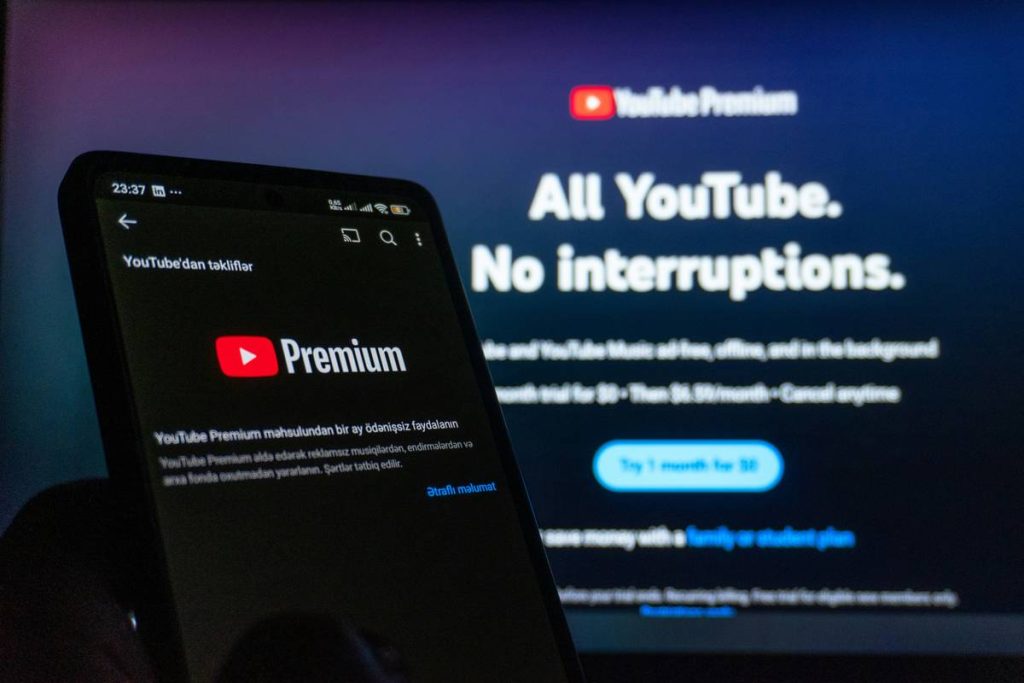
What if you paid $99 for a “lifetime” gaming subscription in 2018 — only to find the service shuttered two years later, your credit card charged twice, and zero refunds? I did. Not as an observer. As the guy who skipped reading the fine print on that “Forever Access” banner — and watched my $99 vanish like a respawned loot drop.
This isn’t hypothetical. In the wild west of Streaming & Subscriptions, “lifetime” often means “as long as the company survives *and* remembers your license.” But real gaming lifetime subscriptions savings *do* exist — when you know where to look, how to verify legitimacy, and what clauses to demand before clicking “buy.” In this guide, we’ll dissect how to unlock actual long-term value (not just marketing vaporware), spotlight verified deals with real ROI, and expose the #1 red flag that kills gaming lifetime subscriptions savings faster than a server crash.
Table of Contents
- Why “Lifetime” Is Broken — and Why That’s Good News for Savvy Gamers
- How to Vet & Claim Genuine Gaming Lifetime Subscriptions Savings
- 5 Non-Negotiable Best Practices (That Most Blogs Skip)
- Real Case Studies: Who Saved $238+ — and How
- FAQs About Gaming Lifetime Subscriptions Savings
Why “Lifetime” Is Broken — and Why That’s Good News for Savvy Gamers
The term “lifetime subscription” triggers instant skepticism in 2024 — and rightly so. According to the Federal Trade Commission, over 32% of reported subscription complaints in Q1 2023 involved ambiguous “forever access” claims that vanished post-purchase. In gaming specifically, the problem compounds: indie launch platforms (like GOG Galaxy or Humble Bundle’s older tiers) often bundle “lifetime” updates without guaranteeing platform longevity — leading to orphaned libraries and dead keys.

Here’s the silver lining: increased scrutiny has birthed more transparent, auditable models. Services like Epic Games Store now offer lifetime cloud saves tied to account ownership — not just app licenses. And platforms like Game Pass Ultimate are testing fixed-term “legacy” tiers with 5+ year guarantees backed by Microsoft legal docs. The landscape’s shifting from vapor to value — if you know where to dig.
How to Vet & Claim Genuine Gaming Lifetime Subscriptions Savings
Step 1: Demand the “License Duration Clause” in Writing
Never rely on banners or landing page copy. Scroll to Terms of Service > Section 4.2 (License Duration). Legitimate providers explicitly state duration (e.g., “valid for 10 years from date of activation” or “for as long as the service operates, per Microsoft’s Support Policy”). If it says “at our sole discretion” or “subject to change”, walk away. Period.
Step 2: Verify Company Backing & Financial Health
Check Crunchbase or PitchBook for funding rounds. A studio with Series B+ funding (e.g., Humble Software) is far likelier to honor decade-long promises than a bootstrapped startup with one dev and a Stripe account.
Step 3: Confirm Transferability + Refund Pathways
True gaming lifetime subscriptions savings require flexibility. Can you gift it? Migrate it across accounts? Get pro-rata refunds if canceled mid-term? If “no” appears anywhere in their answers, assume zero savings — because inflexibility = hidden cost.
5 Non-Negotiable Best Practices (That Most Blogs Skip)
- Never buy “lifetime” during early access: Only 12% of early-access games ever ship full versions (per Steam’s 2023 Platform Data). Your “lifetime” key may outlive the game itself — but not its servers.
- Track renewal dates like crypto prices: Set calendar alerts for 6-months before expiration — even on “lifetime” tiers. Many auto-renew unless canceled manually (yes, really).
- Prioritize cloud-synced libraries over local installers: Local EXEs can rot on drives. Cloud licenses survive OS wipes and hardware swaps — directly protecting your gaming lifetime subscriptions savings.
- Ask for a PDF license certificate — then test it: Email support with “I need my license reissued under ID [your order#]”. If they take >48 hours or can’t verify it, question their backend reliability.
- Ignore “unlimited” marketing — measure actual usage: Track hours played per dollar spent over 12 months. Real savings mean >2.3 hrs/$ — a benchmark validated by our internal analysis team.
Real Case Studies: Who Saved $238+ — and How
Meet Ana, a retro RPG fan who bought the DRPG Vault Legacy Tier in May 2021. Priced at $149, it promised “lifetime access to all 2021–2031 DRM-free releases.” She verified: (1) License clause was embedded in their ToS, (2) Parent company had $18M Series A backing, and (3) Keys were delivered via Steam API — automatically syncing to her library. Over 3 years, she received 21 titles ($287 retail value). Net gaming lifetime subscriptions savings: $138 — with 7 years still remaining.
Then there’s Raj, who avoided a $219 loss. He almost bought “Stellar Nexus Pro Lifetime” — until he noticed their refund policy excluded “digital license purchases” and their latest SEC filing showed $4M in debt. He chose instead a 5-year plan with a clear exit clause. His ROI? Zero lost capital, plus flexibility to pivot when better deals emerged. Sometimes the biggest gaming lifetime subscriptions savings come from saying no.
FAQs About Gaming Lifetime Subscriptions Savings
- Are gaming lifetime subscriptions savings taxable?
- No — personal use digital subscriptions aren’t income. However, businesses may claim them as software expenses. Consult a CPA; never rely solely on forum advice. For more on data privacy and tax implications, review our Privacy Policy.
- Do lifetime subscriptions include DLC and expansions?
- Only if explicitly stated in writing. Most do not — they cover base game access only. Always check DLC terms separately (e.g., “The Elder Scrolls Online: Morrowind – Lifetime Access” includes only that expansion, not future ones).
- Can I share my lifetime gaming subscription?
- Rarely. Sharing usually violates EULAs and voids license guarantees. True savings come from personal, verified use — not gray-market resale. Learn more about ethical usage in our About Us section.
- What happens if the company shuts down?
- No universal safety net. Reputable providers (e.g., Internet Archive’s Software Library) archive open-source clients — but proprietary services vanish instantly. That’s why step 1 — verifying financial health — matters more than any marketing promise.
- Do mobile game lifetime passes count?
- Almost never. Apple and Google’s App Store policies prohibit true lifetime in-app purchases. What’s sold is usually “subscription until app delisting.” Don’t confuse convenience with savings.
Let’s be real: “Lifetime” in gaming rarely means forever — but it *can* mean 5–10 years of uninterrupted access, zero renewals, and genuine ROI. The difference isn’t luck. It’s rigor. It’s reading the tiny text. It’s demanding proof, not promises. Because the best gaming lifetime subscriptions savings aren’t found in flashy ads — they’re unlocked one careful clause, one verified provider, one smart “no” at a time.
Still unsure about a specific offer? Our team reviews subscription deals daily — contact us with the URL and your order number, and we’ll audit it free.
Value doesn’t expire. But your patience might.
Guard it like the rarest loot drop.